Looking for more information about rectal cancer?
Explore this page if you’re wanting to better understand how radiotherapy is used to treat rectal cancer.
What is rectal cancer?
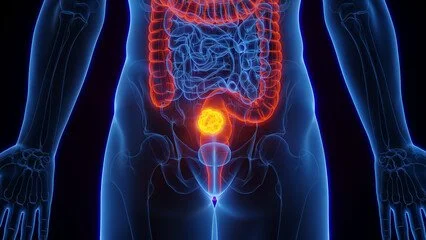
Rectal cancer affects the final section of the large intestine, or bowel. I’m a clinical oncologist that specialises in treating rectal cancer with radiotherapy.
What is a clinical oncologist?
I’m trained to use radiotherapy and drug-based treatments to treat cancer.
Radiotherapy may be used on its own, or in combination with other therapies, to treat rectal cancer. I’ll work with other specialists to ensure your radiotherapy is planned alongside any other treatments you may benefit from.
Once your treatment plan is agreed, I’ll organise your radiotherapy treatment and liaise with the therapeutic radiographers who’ll deliver your daily radiotherapy treatment. I’ll review you regularly throughout your treatment, ensuring you remain well and any side effects are identified early and managed promptly.
What are the five possible steps in the treatment of cancer?
Radiotherapy may only form part of your overall treatment. Here’s a breakdown of the five main steps in the treatment of cancer, though the steps in your journey may not follow the same order, and you may not need all five steps.
-

Cancer surgery
Surgery aims to completely remove the rectal cancer
-

Chemotherapy
Chemotherapy is sometimes used alongside surgery and/or radiotherapy to treat the rectal cancer
-

Radiotherapy
Radiotherapy is precisely targeted at the pelvis, to treat the rectal cancer
-

Immunotherapy
Immunotherapy plays an important role in the treatment of some cancers, including clinical trials
-

Targeted drug therapy
Alongside chemotherapy, other drug treatments can target specific parts of the cancer cells to induce further response.
More information
-
Your surgeon may have recommended a consultation with me because:
You may need radiotherapy to shrink the cancer before an operation is planned. Your surgeon and I will co-ordinate your care.
You may be keen to try and avoid an operation – which sometimes requires a colostomy bag – for your rectal cancer.
Radiotherapy may help to relieve symptoms from your rectal cancer.
-
Radiotherapy is high powered “x-rays” (called photons) that are precisely targeted at the tumour plus a small margin around the tumour and nearby areas that the cancer may try to affect.
The radiotherapy works by causing damage to the DNA in the cancer cells, causing them to be broken down and destroyed.
Radiotherapy may also affect normal tissue that is near the cancer, which is why side effects occur. This will be carefully discussed with you, once we decide what treatment approach is best for you.
-
Radiotherapy is a highly effective cancer treatment. It’s powerful enough to shrink a cancer before an operation is carried out or may avoid the need for an operation altogether. Radiotherapy can also be used to treat the symptoms of your cancer. With advancing technology, we can deliver the treatment accurately – this helps to maximise the treatment response and also may reduce the side effects.
-
If you’ve been referred to me by your surgeon, we’ll meet for a consultation at The Christie Private Care so I can share information about the role of radiotherapy in your care.
We’ll spend time talking about your diagnosis and symptoms, and about your treatment options. I’ll provide written information too, including patient information leaflets. Either during this appointment or at a subsequent visit, you’ll be asked to sign consent forms to get the treatment plan in motion.
If you’ve contacted me for a second opinion, I’ll request a copy of your letters, scan images and reports before we meet. Then we’ll have a consultation (either in person or virtually if you prefer) so we can talk through your diagnosis and the treatment options, and I’ll offer my opinion.
At the end of our consultation, you’ll receive a letter summarising our discussion.
-
A treatment plan is the plan of action for your cancer treatment. We (the specialists involved in your care, and you) will agree the best treatment approach, so you know what’s ahead.
-
Radiotherapy may be given to shrink your cancer and/or help symptoms. The sequence of treatments (radiotherapy, surgery, chemotherapy) is different for each patient, which is why a team approach to your care is so important.
-
After our consultation, and once a radiotherapy treatment plan has been agreed, you’ll return for a CT scan to help me plan your radiotherapy. Your radiotherapy treatment will then start about two weeks later.
-
Depending on which radiotherapy approach we think is best for your cancer, you may need between one to five weeks of treatment.
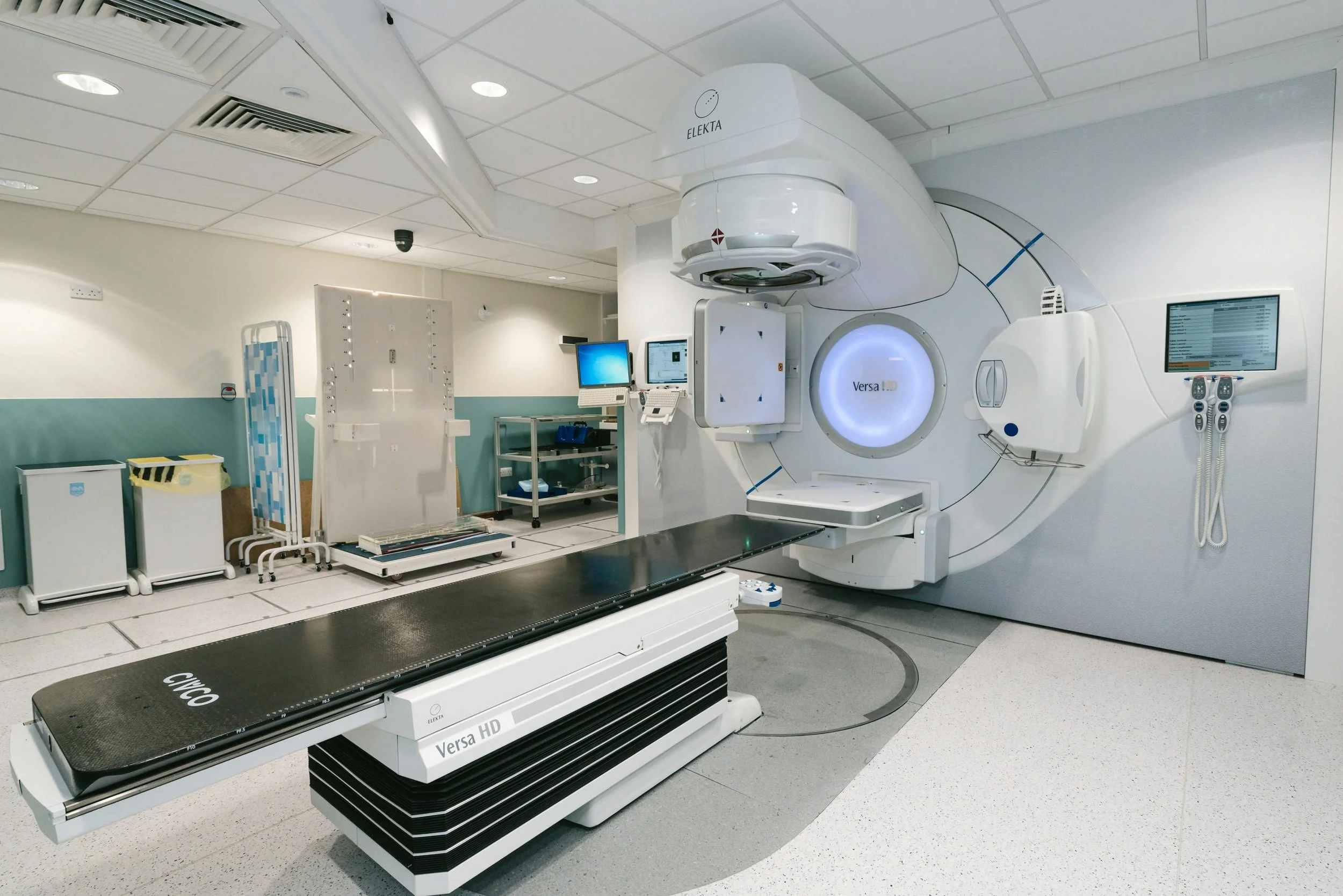
Radiotherapy is a painless treatment, requiring you to lie still for approximately 20 minutes. You’ll see the machine move around you, but you won’t be enclosed. The radiographers delivering your treatment will give you clear instructions each day.
You’ll usually receive daily radiotherapy treatment (Monday to Friday) and will be treated as an outpatient. You’ll be well enough to drive to and from the hospital each day.
I’ll see you once a week during your treatment plan. At the end of treatment, I’ll phone you to check that any side effects are settling, after which you’ll be referred back to your surgeon.
-
The ongoing care plan will be different, dependent on why you needed radiotherapy. The following are some examples.
Radiotherapy is increasingly used to achieve a “clinical complete response” which means there’s no evidence of remaining cancer on your scans (CT & MRI) or camera tests (endoscopy) following treatment. In this scenario, you’ll be advised about your future care options which will likely include entering a surveillance programme to monitor for evidence of the cancer regrowing (repeat camera tests and scans). Your surgeon will usually arrange these surveillance visits.
We may advise that you still proceed with an operation to confirm whether there is cancer remaining or not.
You may continue with other cancer treatments, for example, chemotherapy under the care of another colleague.
This is a careful discussion between you, me and your surgeon so we can collectively agree what is right for you. We’ll consider your treatment wishes alongside the knowledge of your cancer when deciding the next steps.
Would you like more information about rectal cancer and radiotherapy?
There are plenty of fantastic sources of information online if you’d like to read more about this disease and how it’s treated. Take a look at these websites, linked below.